Posts

When I Think of Research

The importance of simulation to the field  of early childhood Simulation in early childhood is significant because it allows me to decipher real-world or real-life situations more carefully and efficiently. Besides, it provides an opportunity for data gathered to be analysed in a manner that is easily substantiated, transferred and comprehended. Also, simulation in the early childhood field provides significant and relevant solutions and clarity into both simple and complex situations or experiments.  Furthermore, it can be safely said that the field of early childhood intertwines with social science. According to the Position Statement on the National Council for the Social Studies (2019), "As young children engage in their play and daily activities, they show a natural interest in the world around them." As a mindful educator/researcher, I am cognizant that the premise of early childhood is laid on relationships and interconnectedness that children forge in their home schoo...
Research Around the World: Japan

Image
This week's focus is on the CHILD RESEARCH NET. First, however, the very name and the attractive logo of the website have caught my attention.  The organization lives by the motto: "Children are our future," which was coined by the founder, Dr Noboru Kobayashi. The motto reminds me of the famous song performed by the late Witney Houston. Here are some of the main current international research topics of focus for CRN Social and emotional skills have a great impact on children's development and learning. So here we discuss how to nurture these skills.? View posts  Focusing on the trends of ECEC around the world, specialists discuss issues regarding children's growth and development. View posts  ICTs are making day-to-day advancement. Explore the discussion on how it should be used for the better in children's development. View posts  Here we discuss building a sound environment where all children, regardless of their needs, can lead a safe and secure life. View...

Improving Boy's Education in Early Childhood

Image
  I have selected the topic of Improving Boy's Education in Early Childhood. Because it is a fact that globally we are losing our boys. As a result, we can hardly find healthy males willing to take their rightful position in society. Also, to assist females with certain tasks. With that said, I have found a fascinating article regarding our boys. Article: Raising and Educating Healthy Boys: A Report on the Growing Crisis in Boys’ Education  Here is the link to the article: https://files.eric.ed.gov/fulltext/ED500855.pdf Summary of the Article Children as young as three and four are really good at observing, and they see the inequities. We are sanctioning this in our practices, and everyone is absorbing it. -- Luba Lynch Executive Director A.L. Mailman Family Foundation  We need to start addressing issues of gender socialization of boys and girls at the preschool level. At stake is the full potential of each individual child’s cognitive, social, and emotional development. ...

My Personal Research Journey

Image
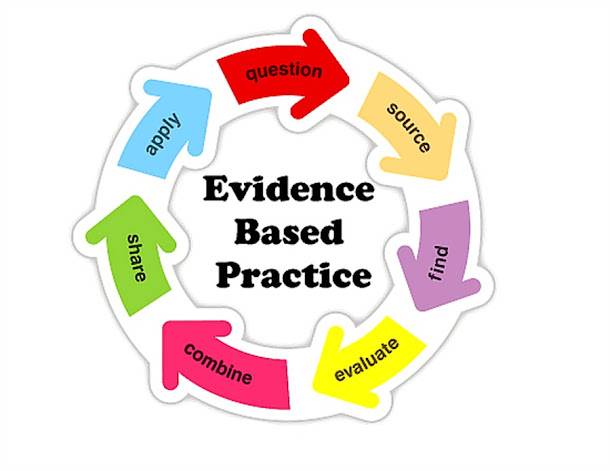
Evidence-Based Practice I have selected Evidence-Based Practice (EBP). As an educator, especially in the early childhood field. I am cognizant that EBP is crucial for my students to maximize their full potential and professional and personal development. Hence, the selection of this simulation topic. To be engaged in EBP is to be a reflective practitioner. Therefore, self-evaluation and introspection are essential ingredients in the EBP (Trochim, 2016). Furthermore, the educator who participates or becomes involved in EBP understands clearly that the child-centred and developmentally appropriate curriculum, coupled with Play, are necessary for all children's biosocial, psychosocial, and cognitive advancement. I am currently a participant in the Effective Principal Training Program, where, as an instructional leader, I must cover 600 hrs of field experience. The program encapsulates identifying problems and stating possible solutions. Then, the implementation takes effect. Followed...

The Grand Finale

Consequences of Learning About International Early Childhood  Field One of the greatest advantages of learning about the international early childhood education field is its multicultural environment. I had the opportunity to get to know other cultures. I developed a sense of awareness and the ability to cooperate with people with different characteristics, customs and cultural norms. As a mindful professional, I learned tolerance, mutual respect, empathy, and understanding of others—their behaviours, motivations, aspirations, and values. These are the type of environment which helps to shape global citizenship and allow you to easily feel comfortable anywhere. I had the opportunity to compare and contrast high-level, high-quality early care and education, global standards, and rich, culturally diverse environments. Interacting with various resources, listening to podcasts and exploring websites gives me an advantage of the world. I have seen where countries offer near-universal s...

Professional Goals, Hopes and Dreams

" Cultivating mutually fulfilling professional relationships with colleagues is a process that provides opportunities to share hopes and dreams, brainstorm relevant questions, share information, and support each other in times of professional challenges" (Laureate Education, 2011). Discussions in the Work Space All successful organizations strive for excellence. The motto of my institution is "Soaring to Excellence." As a result, the topical issues regarding quality and early childhood professional at my institution are mentoring, being reflective, and data-driven. In the conversation with Delila Vasquez, the host alluded that one other issue is the wage inequity in the early childhood field, which is no secret as those working in the field is very poorly compensated. Secondly, the working conditions in the field themselves, including the lack of mentors, the lack of time for reflection on what happened during the day, the lack of collaboration opportunities (Laurea...

Sharing Web Resources

Image
  Exploring Zero To Three ZERO TO THREE has a significant track record in turning the science of early development into helpful resources, practical tools and responsive policies for millions of parents, professionals, and policymakers. Since launching in 1977 as the National Center for Clinical Infant Programs, ZERO TO THREE has grown to more than 160 employees working on a wide range of issues impacting infants, toddlers, young children and their families. By bringing together leaders in the fields of medicine, mental health, social science research, child development and community leadership, they have built a strong reputation for delivering quality programs, products and services to millions nationwide and across the globe. HealthySteps, a program of ZERO TO THREE, is an evidence-based, team-based pediatric primary care program that promotes the health, well-being and school readiness of babies and toddlers, with an emphasis on families living in low-income communities. Their ...