Posts

When I think of Child Development
Image
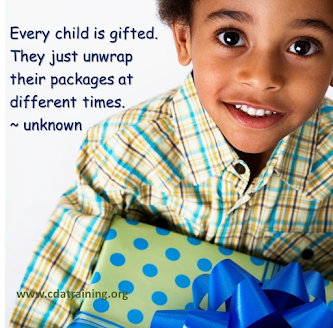
  Children are unique in their own right, and they must be provided with the opportunity to grow and develop at their own space and stage. Children all have potential, and it is my duty as an early childhood professional to maximise their full potential. Whether they are gifted/talented or suffer from disabilities, all children must be catered for in an inclusive classroom. Children should be allowed to play and discover the world around them. As a result, whether structured or unstructured, early childhood professionals, provide students with the opportunity to develop social skills and maintain healthy relationships. Lastly, children should be taken out of the proximal development zone into an area where they learn something new daily. Leaving from the known to the unknown. collaborating and cooperating to unleash the creativity and innovativeness that is waiting to unwrap.

Testing for Intelligence

A holistic approach to child development seeks to simultaneously address the physical, emotional, relational, intellectual and spiritual aspects of a child's life. The importance of the Holistic Approach is that its children learn different things at different stages, e.g. walking talking, fine motor skills etc. Holistic learning is especially effective for young children because it encompasses the whole child and a broad range of learning goals. Besides, it focused on more than cognitive development, holistic learning incorporates mind, body, spirit, behaviour and social interaction.  I believe the Multiple Intelligences play a very vital role in the holistic development of children. 'Learning' and 'education' are embedded in care and development (Myers, 2001). When we take about Early Childhood Education, the outcomes are high school enrollment, schools retentions, intellectual and academic achievements, low delinquency rates, better job opportunities. The fact is...

Consequences of Stress on Children's Development

   Natural Disasters occur every so often and harm many children and their families globally. Like those children, I have the experience of natural disasters in the form of hurricanes. However, Hurricane Gilbert, 1988 has been the most lasting and impactful experience, one that is still vivid in my mind. I was only 12 years old. We heard on the news that a hurricane was coming and it would make landfall at approximately 3:00 pm on September 12, 1988. I went to school that very day. While at school, the principal sent us home midday, for us to escape the eventualities. Besides, upon reaching home, I was in my community playing until the rain started. Not knowing what to expect, I was anticipating this hurricane as though it was a gift coming my way.  The wind and the rain started, and we were all inside.      Furthermore, Hurricane Gilbert slammed an unprepared Jamaica. No one battened their windows and doors, nor secured non-perishable food items and stoc...

Child Development and Public Health

I am going with the health issue of Sudden Infant Death Syndrome (SIDS), which is a global concern not only in the US, Korea and Africa, but worldwide. Laureate Education states. “healthy children are a prerequisite for healthy communities and healthy societies. Public health measures are designed to contribute to children’s health.” (Laureate, 2020). In the United States of America “sudden infant death syndrome (SIDS) remains one of the most intriguing mysteries in medicine. The US National Institute of Child Health and Development defines this syndrome as the “the sudden death of an infant under one year of age, which remains unexplained after a thorough case investigation, including the performance of a complete autopsy, examination of the death scene, and review of the clinical history.” (Laureate, 2020). However, many risk factors contribute to SIDS such as prone sleeping position (lying face down), sleeping on the same bed with parents and higher ambient temperature (the aver...

Childbirth in My Life and Around the World

Image
  The Birth of My Child   It was a typical pregnancy that lasted approximately 38 weeks. I was so excited to welcome the birth of my son who was due Wednesday. I also had my last doctor’s appointment on that same day, which I attended. The baby was not ready “to see the light of day” for some reason. So, my doctor told me that he would have me sent to the hospital to be admitted on Friday and he would also make preparations to induce labour. “Another drug-based intervention is induced labour, in which labour is started, speeded up, or strengthened with Pitocin, which is artificial oxytocin” (Berger, 2018). Unfortunately, I met in an accident on Thursday, so I was taken to the hospital before my scheduled appointment. When I went in, I registered and was observed. The observation showed that I was having contractions. However, this was as a result of the accident. I was placed in the maternity ward, where I was observed daily. On Friday, I was transported to a room which was ...

Words of Inspiration and Motivation

Ideals contained in the NAEYC and DEC codes of ethics that are meaningful to me: "To work to ensure that appropriate assessment systems, which include multiple sources of information, are used for purposes that benefit children" (NAEYC, 2005 1.4.5). Response: This is significant to my professional life in that, too often we as educators fail our students and limit their capacity to grow and excel through one type of assessment, which is "paper and pen" which is Formative assessment. There are numerous ways of assessing students capabilities. A few of these strategies are Portfolio, Journals, Observations, Checklists, Running Records, Reflections and many others. "We shall provide services and supports to children and families fairly and equitably while respecting families’ culture, race, language, socioeconomic status, marital status, and sexual orientation" (The Division for Early Childhood, 2009). Response: Each child has the right to high-quality servic...

Growing Your Collection of Resources

Image
  NAEYC. (2009). Developmentally appropriate practice in early childhood programs serving children from birth through age 8 . Retrieved May 26, 2010, from http://www.naeyc.org/files/naeyc/file/positions/dap NAEYC. (2009). Where we stand on child abuse prevention . Retrieved May 26, 2010, from http://www.naeyc.org/files/naeyc/file/positions/ChildAbuseStand.pdf NAEYC. (2009). Where we stand on school readiness . Retrieved May 26, 2010, from http://www.naeyc.org/files/naeyc/file/positions/Readiness.pdf NAEYC. (2009). Where we stand on responding to linguistic and cultural diversity . Retrieved May 26, 2010, from http://www.naeyc.org/files/naeyc/file/positions/diversity.pdf NAEYC. (2009, April). Early childhood inclusion: A summary . Retrieved May 26, 2010, from http://www.naeyc.org/files/naeyc/file/positions/DEC_NAEYC_ECSummary_A.pdf Zero to Three: National Center for Infants, Toddlers, and Families. (2010). Infant-toddler policy agenda. Retrieved May 26, 2010, from http://main.zero...